Frequently Asked Questions
THE KIT
This kit list is designed for a versatile photographer. It balances the high-resolution power of Canon's Full-Frame system with the lightweight, rugged, and high-speed advantages of the OM System (formerly Olympus).
1. Camera Bodies
System
Canon RF
Canon EOS R5 II
Canon EOS R6 II
OM System
OM-1 Mark II
2. Essential Lenses
Canon (The Detail & Depth Kit)
The Trinity:
RF 15-35mm f/2.8L IS USM (Ultra-wide landscapes)
RF 24-70mm f/2.8L IS USM (Standard workhorse)
RF 70-200mm f/2.8L IS USM (Portraits/Compressed landscapes)
The Wildlife Reach:
RF 100-500mm f/4.5-7.1L IS USM (Versatile wildlife)
Low Light Prime:
RF 50mm f/1.2L (Unmatched bokeh)
OM System (The Macro & Long-Range Kit)
The Long Reach:
M.Zuiko 150-400mm f/4.5 TC1.25x IS PRO (Equivalent to 300-800mm; best for birding)
The Macro Specialist:
M.Zuiko 90mm f/3.5 Macro IS PRO (Unbeatable 2:1 magnification/4:1 equiv)
Rugged Travel:
M.Zuiko 12-100mm f/4 IS PRO (The "one-lens" solution)
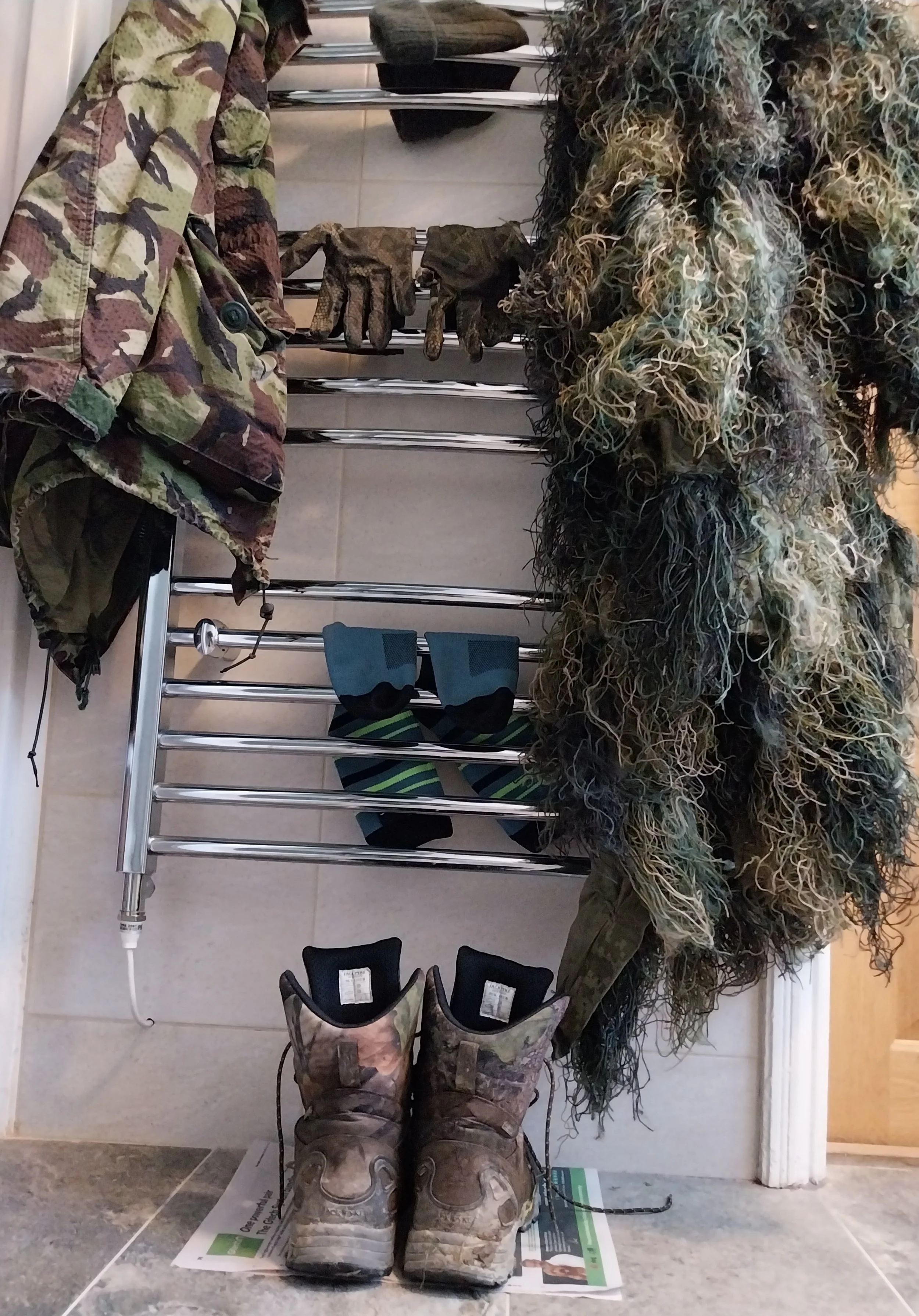
3. Camouflage & Field Gear
Since you're heading into the field, staying "invisible" is key.
Lens Covers:LensCoat Neoprene covers (Realtree Max4 or Forest Green) for all long lenses.
Body Protection: Silicone camo skins for the camera bodies.
Hide/Blind:Tragopan V6 or a simple Camo Netting (3m x 2m) for stationary wildlife shoots.
Clothing:
Ghillie Suit elements (Leafy suit or camo poncho).
Mechanix Wear Camo Gloves (Keep hands hidden while operating controls).
4. Support & Power
Tripod:Gitzo Systematic Series 3 with a Wimberley WH-200 Gimbal Head (essential for heavy Canon glass).
Monopod:Leofoto MP-364C (for the OM System mobile shooting).
Power:
4 x LP-E6P Batteries (Canon).
5 X BLX-1 Batteries (OM System).
Portable Power Bank: Anker 737 (USB-C PD for in-camera charging).
5. Storage & Transport
Memory:
ProGrade Digital CFexpress Type B (For Canon R5 II).
Lexar Professional SDXC UHS-II (V90) (For OM-1 II).
The Bag:
Shimoda Action X50 (Camo/Army Green) — Excellent for carrying two systems comfortably.
Pelican 1510 Protector Case (For secure transit).
6. Maintenance & Extras
Rocket Blower & Sensor Swabs (Field cleaning).
Rain Covers:Think Tank Photo Hydrophobia (even though OM System is weather-sealed, it’s good for the Canon).
Peak Design Slide Straps .
Pro-Tip: If you are shooting wildlife, use the OM System for your "reach" and macro shots (due to the 2x crop factor and incredible stabilization) and the Canon for landscapes and high-resolution portraits where shallow depth of field is needed.
-
The "Quiet Observer" method, often championed by photographers like Terry, is less about technical gear and more about biological empathy. It is a philosophy of "active invisibility," where the photographer seeks to become a natural, non-threatening fixture of the landscape rather than an intruder.
The Core Mechanics of the Method
1. Pre-Visualisation and "The Sit"
Unlike "stalking," where a photographer pursues an animal, the Quiet Observer identifies a high-probability location (a lekking site, a feeding corridor, or a nesting boundary) and arrives hours before the subject.
The Settle: It takes roughly 20–30 minutes for a woodland or moorland to "reset" after a human enters. The Quiet Observer waits for the "alarm calls" of blackbirds or crows to cease, signaling that the local wildlife has accepted the new, stationary object.
Breaking the Outline: Using local flora or a simple scrim net to break up the human silhouette, which is the most terrifying shape to a wild animal.
2. Habituation vs. Concealment
While hides (blinds) are useful, the true Quiet Observer often works in the open, using slow, rhythmic movements. Over days or weeks, the subject (such as a Red Grouse on the Stiperstones) becomes "habituated"—not to the human, but to the presence of a non-predatory entity.
3. Sensory Management
Scent: Positioning downwind is basic, but the Quiet Observer also avoids "synthetic" smells—detergents, deodorants, or even strong coffee.
Sound: Using "silent shutter" modes (electronic shutters) and ensuring that tripod legs and clothing (avoiding "swishy" waterproofs) are silent.
The Difficulties: The Price of Silence
The method is physically and mentally grueling, often yielding zero results for days.
The "Statue" Tax: Maintaining a single position for 6–8 hours leads to muscle cramping, joint stiffness, and in the Shropshire winter, a deep, bone-chilling cold that test’s one's resolve.
The Ethical Dilemma: If a subject approaches too closely, the photographer must decide whether to stop shooting. If the shutter sound or the movement of the lens causes a "startle response," the method has failed.
Environmental Hostility: On the Stiperstones, the "Quiet Observer" is at the mercy of the "Devil’s Chair" weather. Mist can roll in and ruin visibility in seconds, or high winds can create "camera shake" that no tripod can fix.
Memorable Achievements: The Rewards of Patience
When the method works, it produces images that feel "candid"—the animal is relaxed, displaying natural behaviours rarely seen by humans.
The "Eye-to-Eye" Moment: One of the greatest achievements is capturing a subject looking directly into the lens with curiosity rather than fear.
Intraspecies Interaction: Because the photographer is "invisible," they witness behaviours like courtship feeding or juvenile play. Capturing a Curlew tending its chicks without the bird ever checking the horizon for the photographer is the ultimate badge of success.
The "Hidden" Shot: Using remote triggers while the photographer is hidden 50 yards away. This allows for ultra-wide-angle shots of wildlife—placing the animal in its massive landscape (like the jagged quartzite tors) while maintaining a macro-level intimacy.
Terry’s Field Notes on Observation
"The best camera is a pair of binoculars and a folding stool. If you spend four days watching and ten seconds shooting, you’ve done it right. You haven't just taken a picture; you’ve earned a memory of a creature that never knew you were there."
-
"The goal is always to be a ghost in the environment. I utilize long-range optics and full camouflage hides so the animal never acknowledges my presence. If an animal stops eating, changes direction, or looks directly at me for an extended period, I’ve already failed. I’d rather lose the shot than change the creature's day."
-
"I strictly avoid it. Baiting creates a 'food-association' that can lead to human-wildlife conflict, which usually ends poorly for the animal. I prefer the 'wait and see' approach; the images are more honest when the behaviour is earned through scouting and patience, not lured."
-
"I wasn't just looking for a portrait; I wanted to capture the relationship between the subject and its harsh environment. By using a wider angle, I’m showing the scale of the landscape—the isolation and the resilience required to survive there."
-
"It starts with biology, not photography. I study migration patterns, local flora, and light angles using topographic maps. I often speak with local rangers or conservationists to understand the specific pressures that habitat is facing so I can document it accurately."
-
"My editing is restorative, not additive. I use post-processing to bring the RAW file back to what my eye actually witnessed—adjusting dynamic range and colour temperature. I never add elements that weren't there or remove permanent features of the landscape."
-
"I manage expectations by selling the process, not just the product. I make it clear that we are working on nature's schedule. Often, the 'failure' to find the primary subject leads to an even more unique discovery of a different species or lighting condition."
-
"Mostly the animals, but in popular spots, a bit of both! In all seriousness, camo allows me to stay in one spot without becoming a visual 'flag' that attracts curious hikers or other tourists who might inadvertently flush the subject away."