More than just a link in BIO
My Ethical Charter
Minimal Disturbance & The Ghost in the Landscape
As a "Guardian of the Ridge," my role is to observe, not to occupy. In the pursuit of the images within this volume, I will adhere to a strict code of fieldcraft designed to protect the fragile ecosystems of the Stiperstones and the dignity of its wild inhabitants.
-
The welfare of the subject always takes precedence over the photograph.
Zero Disturbance: If an animal changes its behaviour—stops feeding, alert-calls, or looks directly at the lens with signs of stress—I withdraw immediately.
No "Gardening": I do not prune, move, or flatten vegetation to clear a line of sight. The habitat remains exactly as it was found.
No Baiting: Every animal in this book was photographed in its natural state, foraging on its own terms. No food or acoustic lures (call-playback) were used to draw subjects closer.
-
To document the "ghosts" of the ridge, I utilize technology that minimizes my physical and auditory footprint.
Acoustic Stealth: All imagery is captured using mirrorless camera systems in silent electronic shutter mode to eliminate mechanical noise.
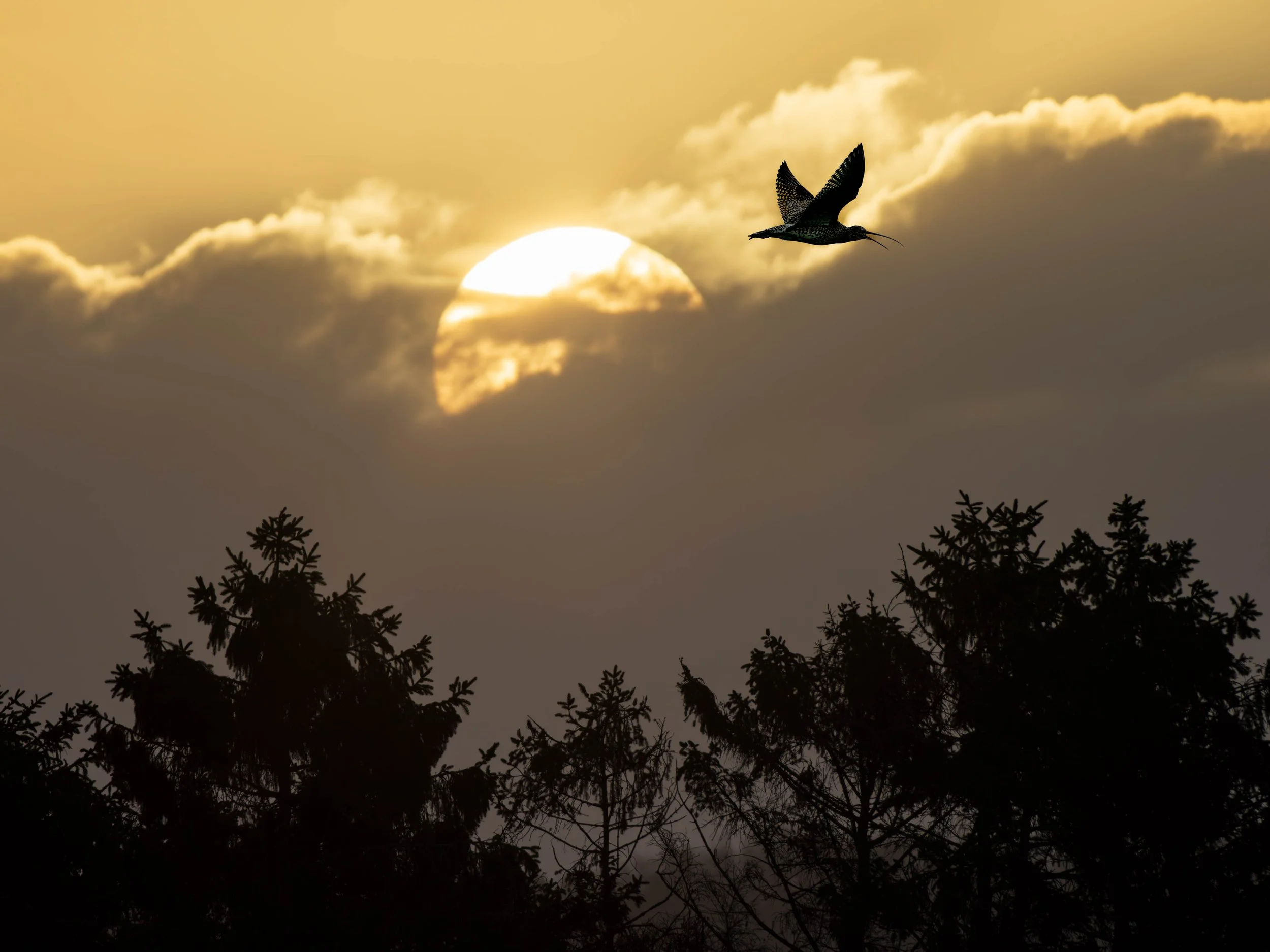
Distance & Compression: By utilizing high-powered telephoto lenses (up to 800mm), I maintain a distance that exceeds the flight-initiation distance (FID) of sensitive upland waders like the Curlew.
Remote Capture: For high-sensitivity areas, cameras were pre-positioned and triggered via long-range wireless remotes, allowing me to remain hundreds of meters away from the site.
-
The Stiperstones is a working landscape. My presence must not hinder those who manage it.
Biosecurity: All footwear and equipment are disinfected between site visits to prevent the spread of soil-borne pathogens or invasive seeds.
Seasonal Compliance: I strictly adhere to the nesting "exclusion zones" set by Natural England and the Shropshire Wildlife Trust.
Livestock Awareness: I maintain a neutral presence around conservation grazing herds (cattle, sheep and ponies), ensuring my work never disrupts their grazing patterns or stresses mothers and calves.
-
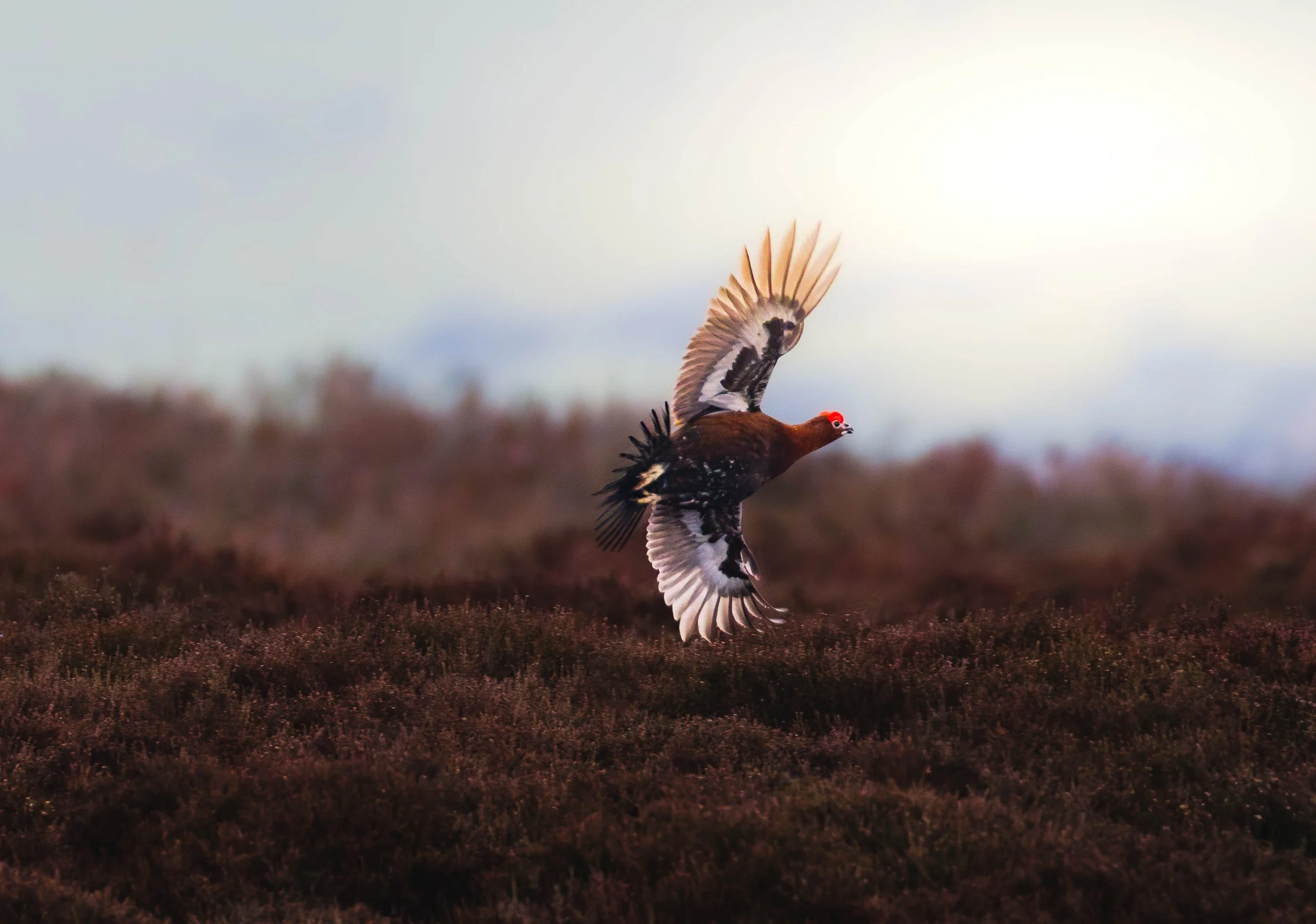
My use of Ghost Photography (long exposures and motion blur) is an ethical choice as much as an artistic one. By choosing to capture the essence of motion rather than chasing a pin-sharp "macro" shot that requires extreme proximity, I allow the animal its space. These images represent a "passing glance" rather than a confrontation.
While the "Ghost" aesthetic captures the spirit of the ridge, Macro Photography serves as the project’s scientific magnifying glass. In the Stiperstones, much of the most critical "Guardianship" happens at a scale invisible to the casual hiker.
I utilise macro photography not just for art, but as biological evidence.
-
Macro photography (high-magnification, life-size imaging) is utilized in this project for four specific strategic reasons:
1. Monitoring Specialist Indicators
Some species are "indicators" of habitat health. If the Mountain Pansy or the Small Pearl-bordered Fritillary are thriving, the entire ecosystem is likely in balance. Macro shots allow the partners to:
Inspect the health of the flora without removing samples.
Identify specific subspecies or wing-patterns that denote a healthy, breeding population.
Documenting the Micro-Climate
The Stiperstones is a "sky island" of sub-alpine conditions. Macro photography captures the physical adaptations of life in this harsh environment, such as:
Sphagnum Moss: Close-ups of the water-storing cells that are the engine of peatland carbon sequestration.
Frost Crystals & Lichen: Documenting how slow-growing lichens (indicators of air purity) interact with the quartzite rock.
The "Stepping Stones" at Ground Level
The Stepping Stones Project isn't just about birds and mammals; it's about the "pollinator highways."
Pollen Transfer: Terry uses macro lenses to document the Bilberry Bumblebee in the act of pollination. This is visual proof of the symbiotic relationship between the NNR’s flora and its insect life.
Soil Health: Close-up shots of the soil crust and fungi networks (Mycorrhizae) that connect the roots of the heather, showing the "invisible" foundations of the ridge.
Declaration of Integrity
"I believe that a photograph of a stressed animal is a failed photograph. My goal is to be a ghost in the landscape—to see everything and be seen by nothing. When you look at these pages, you are looking at nature in its most honest, undisturbed state."
— Terry Moore, Documentarian
Patience:
The shutter remains open as long as the landscape needs.
Precision:
Every safety protocol and every focus point is calculated..
Preservation:
The welfare of the subject always comes before the shot..